Forsyth County Dog Registration Information
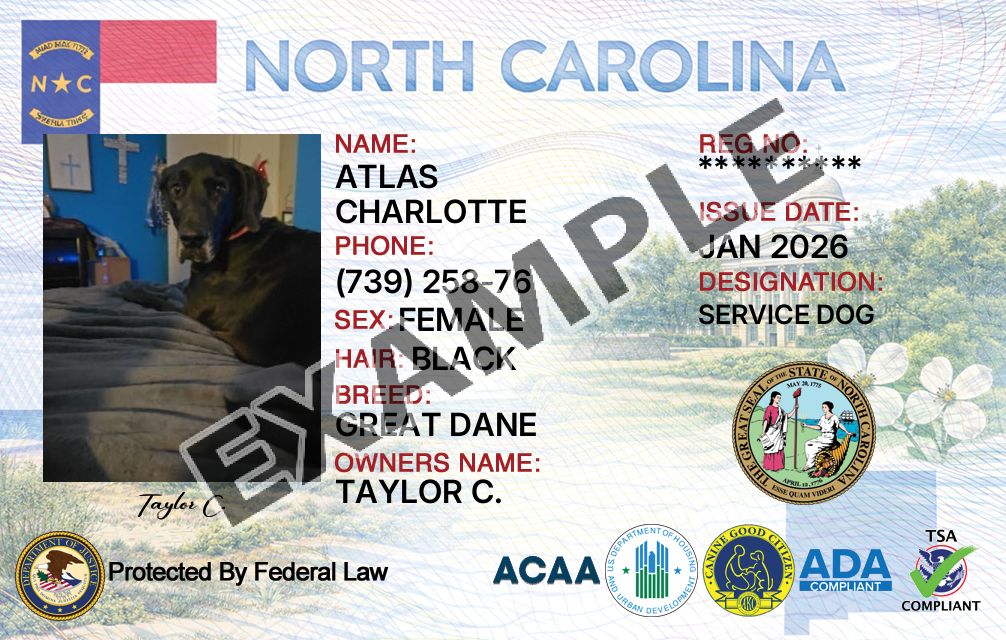
Service Dogs and Emotional Support Animals in Forsyth, North Carolina
If you’re asking where do I register my dog in Forsyth County, North Carolina for my service dog or emotional support dog, the key is understanding that “registration” can mean different things locally. In Forsyth County, most residents are not buying an annual pet license the way some counties do. Instead, the most common required step is keeping your dog’s rabies vaccination current and following local animal ordinances—while service dog legal status and emotional support animal (ESA) status come from entirely different laws and documentation.
Where to Register or License Your Dog in Forsyth County, North Carolina
Because dog licensing is often handled locally, start with the county agencies that enforce animal ordinances and rabies rules. The offices below are examples of official points of contact within Forsyth County for animal control dog license Forsyth County, North Carolina questions, rabies enforcement, citations, and guidance on where to register a dog in Forsyth County, North Carolina.
Forsyth County Sheriff’s Office — Animal Services (Animal Services Division)
- Phone: 336-917-7750
- Email: animalservices@fcso.us
- After-hours / urgent non-emergency: 336-727-2112
- Hours: Not listed on the referenced page (call to confirm)
Forsyth County Animal Shelter (County Animal Shelter facility)
- Phone: 336-703-2480
- Email: Not listed in the referenced official source (call to ask)
- Hours: Not listed in the referenced official source (call to confirm)
Forsyth County Sheriff’s Office — Administration (General line)
- Phone: 336-917-7001
- Email: Not listed as a direct address on the referenced page
- Hours: Not listed on the referenced page (call to confirm)
Overview of Dog Licensing in Forsyth County, North Carolina
What “licensing” usually means in North Carolina
In North Carolina, dog “licensing” often overlaps with rabies compliance. Under state law, dogs (and other covered animals) must be vaccinated against rabies on schedule, and rabies control is handled through local government—typically your county animal control/animal services and the county health director. Forsyth County ordinances also address rabies tags, confinement rules, and local registration fees tied to rabies vaccination.
Forsyth County’s approach: local enforcement and limited licensing scenarios
Forsyth County has publicly communicated changes to pet licensing requirements in the past. In practical terms, many residents will focus on: (1) keeping rabies vaccination current and (2) following local animal ordinances. Depending on your dog’s status—especially if a dog is officially declared dangerous—additional licensing or annual fees may apply. If your main goal is simply to prove your dog is “registered,” ask the county office what documentation they accept locally (for example, a current rabies certificate and rabies tag information, plus microchip and ID collar details).
Rabies vaccination and tag requirements (the item most people actually need)
Rabies rules are enforced locally. Your veterinarian issues a rabies vaccination tag when the vaccine is administered, and local ordinances commonly require dogs to wear a current rabies tag and a collar with owner identification, with limited exceptions in specific circumstances. Keeping a current rabies certificate is also important if your dog ever bites/scratches someone or is exposed to a potentially rabid animal, because confinement/quarantine rules can depend on vaccination status.
How Dog Licensing Works Locally in Forsyth County, North Carolina
Step 1: Confirm what requirement applies to your dog
Start by clarifying whether you need (a) a general pet license, (b) rabies registration only, or (c) a specific license tied to a dangerous dog designation. Forsyth County Animal Services (through the Sheriff’s Office Animal Services Division) is the most direct place to ask: “Do I need a dog license in Forsyth County, North Carolina, or do I only need rabies documentation?” Also ask how the county handles rabies registration fees if your dog was vaccinated outside the county.
Step 2: Keep rabies vaccination current and keep documentation accessible
Even when a county does not require annual pet licensing for every dog, rabies compliance still matters. Best practice is to keep: your dog’s rabies certificate, the rabies tag number, and your veterinarian’s contact information. Store a digital copy on your phone and keep a paper copy at home. If an animal services officer asks for proof (for example, during an investigation, after a bite incident, or after reclaiming a dog), having documentation ready can save time.
Step 3: Use a real ID collar and consider microchipping (not a substitute for rabies compliance)
Forsyth County ordinances address collar and owner identification expectations. A microchip can help reunite lost pets, but it is generally not a replacement for a visible collar ID and rabies tag. Use a sturdy collar with an ID tag that includes at least a phone number, and keep the rabies tag attached when required.
Step 4: If you received a citation or need enforcement guidance
For ordinance enforcement questions (including rabies enforcement), contact the Animal Services Division using the official phone/email listed above. If you need a deputy to respond to an active situation (loose aggressive dog, bite incident, cruelty/neglect concerns), use the 24/7 non-emergency line instead of email/voicemail.
Service Dog Laws in Forsyth County, North Carolina
A service dog is not “registered” with the county to become legal
A common misconception is that you must “register” a service dog with the county to make the dog official. In reality, a service dog’s legal status comes from disability rights laws (including federal rules governing public access). County animal services can help with rabies/enforcement questions, but they do not “certify” your dog as a service dog.
What makes a dog a service dog (practical definition)
Generally, a service dog is a dog that is individually trained to do work or perform tasks for a person with a disability. The tasks must be directly related to the person’s disability (for example, guiding, alerting, retrieving, interrupting a harmful behavior, or providing mobility support). Being well-behaved in public is important, but good behavior alone does not create service dog status.
Service dogs still must follow local animal laws
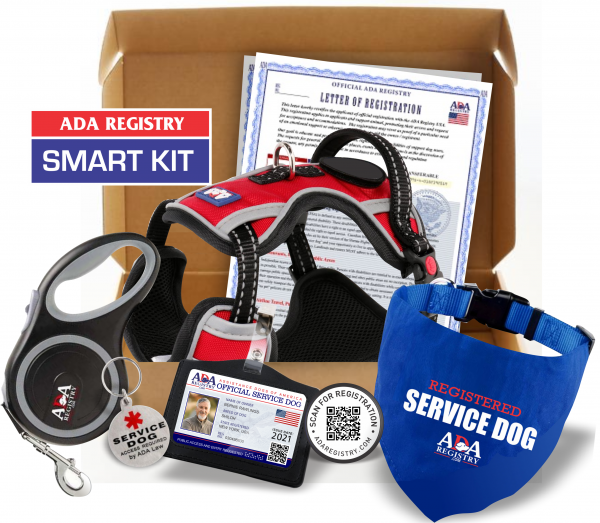
Even though a service dog has special public access protections, the dog is still subject to local rules like rabies vaccination, rabies tags where required, leash/control rules, and dangerous dog processes (if applicable). If you are trying to “register” because an office asked for proof, the most common official document you can provide locally is your dog’s rabies certificate and current tag information—not a paid “service dog registry” certificate from a third-party website.
Emotional Support Animal Rules in Forsyth County, North Carolina
Emotional support animals (ESAs) are different from service dogs
An emotional support animal provides comfort by presence, but is not necessarily trained to perform specific tasks related to a disability. Because of this difference, an ESA typically does not have the same public access rights as a service dog in places like restaurants, stores, or other general public spaces (unless the location chooses to allow pets).
There is no county “ESA registration” that creates ESA rights
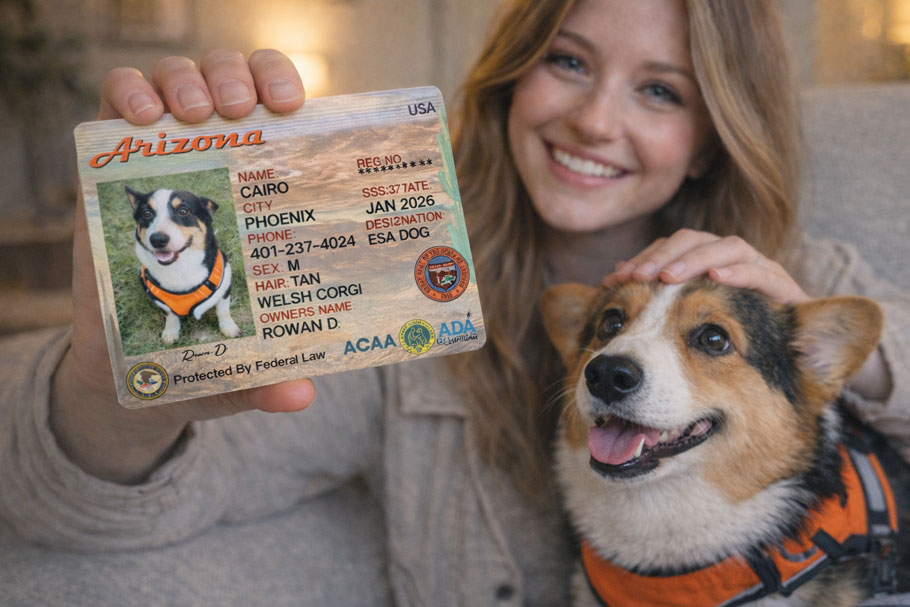
If you see a site selling ESA registration, IDs, vests, or certificates, that is not an official county process. For local compliance in Forsyth County, your responsibilities are the same as other dog owners: follow rabies vaccination requirements, keep your dog under control, and comply with applicable animal ordinances.
Housing and documentation: what landlords usually look for (without buying a registry)
In housing contexts, documentation is typically centered around a reliable statement from a qualified healthcare provider establishing a disability-related need for the animal. If you are seeking an accommodation, focus on legitimate clinical documentation (when appropriate) and local pet compliance (rabies records). County offices generally handle rabies/animal control issues, not ESA accommodation decisions for private housing.
Frequently Asked Questions
Register A Dog In Other North Carolina Counties
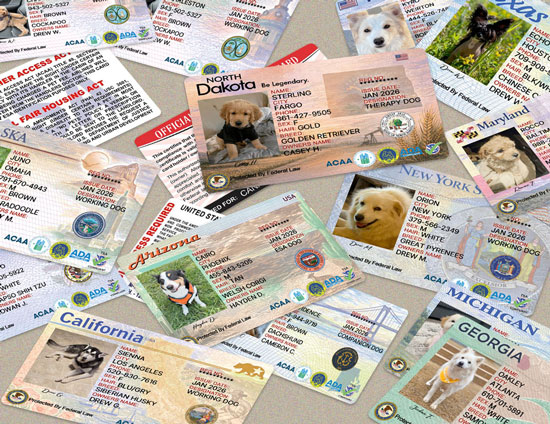
Select your county below to get started with your dog’s ID card. Requirements and license designs may vary by county, so choose your location to see the correct options and complete your pup’s registration.
- Alamance County Dog Registration
- Alexander County Dog Registration
- Alleghany County Dog Registration
- Anson County Dog Registration
- Ashe County Dog Registration
- Avery County Dog Registration
- Beaufort County Dog Registration
- Bertie County Dog Registration
- Bladen County Dog Registration
- Brunswick County Dog Registration
- Buncombe County Dog Registration
- Burke County Dog Registration
- Cabarrus County Dog Registration
- Caldwell County Dog Registration
- Camden County Dog Registration
- Carteret County Dog Registration
- Caswell County Dog Registration
- Catawba County Dog Registration
- Chatham County Dog Registration
- Cherokee County Dog Registration
- Chowan County Dog Registration
- Clay County Dog Registration
- Cleveland County Dog Registration
- Columbus County Dog Registration
- Craven County Dog Registration
- Cumberland County Dog Registration
- Currituck County Dog Registration
- Dare County Dog Registration
- Davidson County Dog Registration
- Davie County Dog Registration
- Duplin County Dog Registration
- Edgecombe County Dog Registration
- Franklin County Dog Registration
- Gaston County Dog Registration
- Gates County Dog Registration
- Graham County Dog Registration
- Granville County Dog Registration
- Greene County Dog Registration
- Guilford County Dog Registration
- Halifax County Dog Registration
- Harnett County Dog Registration
- Haywood County Dog Registration
- Henderson County Dog Registration
- Hertford County Dog Registration
- Hoke County Dog Registration
- Hyde County Dog Registration
- Iredell County Dog Registration
- Jackson County Dog Registration
- Johnston County Dog Registration
- Jones County Dog Registration
- Lee County Dog Registration
- Lenoir County Dog Registration
- Lincoln County Dog Registration
- Macon County Dog Registration
- Madison County Dog Registration
- Martin County Dog Registration
- McDowell County Dog Registration
- Mecklenburg County Dog Registration
- Mitchell County Dog Registration
- Montgomery County Dog Registration
- Moore County Dog Registration
- Nash County Dog Registration
- New Hanover County Dog Registration
- Northampton County Dog Registration
- Onslow County Dog Registration
- Orange County Dog Registration
- Pamlico County Dog Registration
- Pasquotank County Dog Registration
- Pender County Dog Registration
- Perquimans County Dog Registration
- Person County Dog Registration
- Pitt County Dog Registration
- Polk County Dog Registration
- Randolph County Dog Registration
- Richmond County Dog Registration
- Robeson County Dog Registration
- Rockingham County Dog Registration
- Rowan County Dog Registration
- Rutherford County Dog Registration
- Sampson County Dog Registration
- Scotland County Dog Registration
- Stanly County Dog Registration
- Stokes County Dog Registration
- Surry County Dog Registration
- Swain County Dog Registration
- Transylvania County Dog Registration
- Tyrrell County Dog Registration
- Union County Dog Registration
- Vance County Dog Registration
- Wake County Dog Registration
- Warren County Dog Registration
- Washington County Dog Registration
- Watauga County Dog Registration
- Wayne County Dog Registration
- Wilkes County Dog Registration
- Wilson County Dog Registration
- Yadkin County Dog Registration
- Yancey County Dog Registration